
Sinus Lift
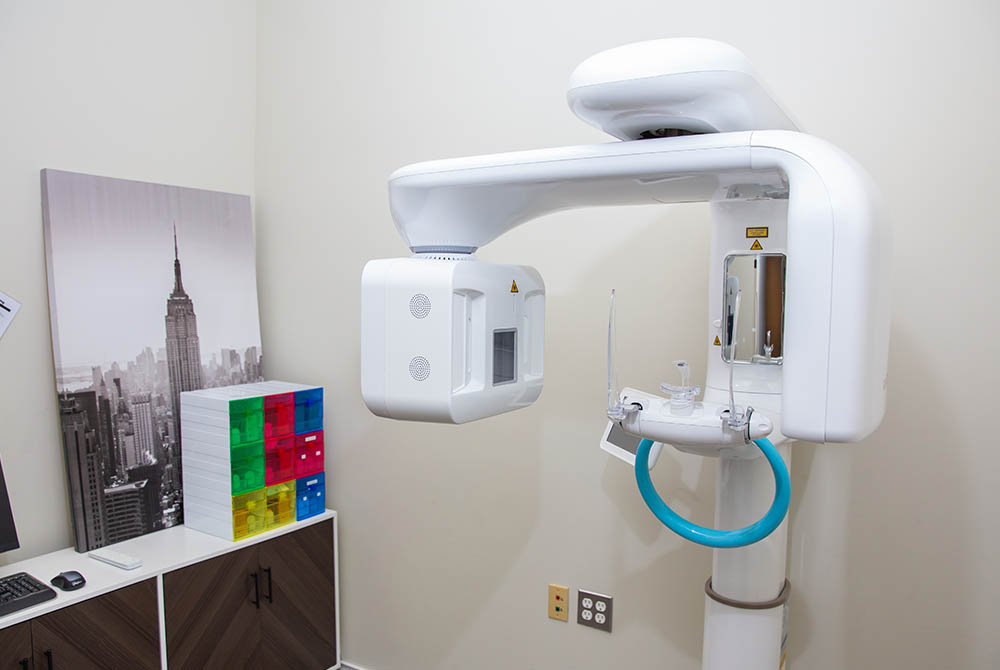
A sinus lift adds bone to the upper back jaw so that dental implants can replace missing premolars and molars where the bone has become too thin to hold them. The maxillary sinus is an air space that sits just above the roots of the upper back teeth, and after those teeth are lost it often expands downward while the jawbone beneath it shrinks. The procedure, also called sinus augmentation or maxillary sinus floor elevation, lifts the thin lining of the sinus floor and places bone graft material in the space beneath it. Implants then go into the added height, either during the same surgery or after the graft has matured into bone. Sinus lifts are part of our implant dentistry at ConfiDental in Carlstadt, and we take a cone-beam CT scan in the office when a case needs one.
Dr. Lee, our board-certified periodontist, does sinus lifts at our Carlstadt office.

Overview
The upper back jaw is one of the most difficult places to fit an implant. The bone there tends to be softer, and once the back teeth are gone the ridge that held them resorbs while the floor of the sinus moves down into the space, a change called pneumatization. The bone left between the mouth and the sinus can end up only a few millimeters tall, too short for an implant of standard length. A sinus lift rebuilds that height from above, inside the sinus, leaving the gum side of the ridge as it is.
Two approaches are in common use. In the lateral-window approach, the gum is opened on the cheek side, a small window is cut in the outer wall of the sinus, the lining is lifted away from the bone like a trap door, and graft material fills the space underneath. In the crestal approach, also called the osteotome or transalveolar technique, the sinus floor is tapped upward through the prepared implant site in the ridge itself; it involves a smaller opening and generally raises the floor by a smaller amount. The choice depends mainly on how much bone remains: with roughly 5 mm or more a crestal approach is often suggested, and with less a lateral window is generally used.
The graft can be the person's own bone (autogenous bone), donor bone from a tissue bank (allograft), processed animal bone, most often bovine (xenograft), or a synthetic material such as calcium phosphate (alloplast), alone or combined. When the existing bone can hold an implant steady, the implant may be placed during the same surgery as the lift. When too little bone remains, the graft heals first, commonly for about 4 to 12 months, and the implants are placed in a second procedure.
A sinus lift is a dental bone-grafting procedure and is not the same as balloon sinuplasty, an operation for chronic sinusitis that widens blocked sinus drainage openings. A sinus lift does not treat sinus disease; it adds bone beneath the sinus floor to support implants, and existing sinus problems are generally treated before it. Bone grafting elsewhere in the jaw, such as rebuilding a narrow ridge or filling a socket after an extraction, is a separate procedure.
When It's Recommended
- Missing upper premolars or molars where the bone below the sinus is too short to hold an implant of standard length
- Downward expansion of the maxillary sinus (pneumatization) after the upper back teeth are lost
- Bone loss in the upper back jaw from gum disease, long-standing tooth loss, or extraction
- Planned implant-supported crowns, bridges, or dentures that need implants in the upper back jaw
What are the risks of Sinus Lift?
When to Avoid
- Radiation therapy that included the upper jaw
- Ongoing chemotherapy
- Antiresorptive medication given for cancer involving the bone
- Sinus or nasal disease that cannot be corrected, such as chronic sinusitis linked to cystic fibrosis or Kartagener syndrome, granulomatous disease such as sarcoidosis or granulomatosis with polyangiitis, or permanent scarring of the sinus lining
- Tumors involving the maxillary sinus or nasal cavity that disrupt normal sinus function
Possible risks
- Swelling, bruising, and pain of the cheek and gum in the first days after surgery
- Bleeding from the surgical site or the nose, including bleeding from an artery in the sinus wall
- Perforation (tearing) of the sinus lining (Schneiderian membrane), the most common complication during surgery
- Sinusitis (inflammation or infection of the sinus) after surgery
- Blockage of the sinus drainage opening
- Infection of the graft, which may require antibiotics or removal of graft material
- Opening of the gum incision during healing
- Loss or partial loss of the graft, leaving less bone than planned
- Failure of the implant to integrate with the bone, with a higher risk reported after membrane perforation
- Pain, nerve injury, or difficulty walking at the donor site when the patient's own bone is harvested from elsewhere in the body, such as the hip
Who needs extra care
- Acute sinusitis, allergic rhinitis, nasal polyps, or a blocked sinus drainage pathway is treated first, with medication or endoscopic sinus surgery, before the lift goes ahead
- Untreated gum disease, or infection at the root tip of a tooth near the sinus, is treated before the sinus floor is elevated
- Smoking is reviewed during planning, because implants placed in augmented sinuses in people who smoke show a higher failure rate in pooled studies, and smoking is associated with more membrane tears, sinusitis, and opening of the incision
- Poorly controlled diabetes, immunosuppression, and antiresorptive or blood-thinning medication call for a risk-benefit review before surgery and can change its timing or plan
- Bony walls inside the sinus (septa), a very thin or markedly thickened sinus lining, a large artery in the sinus wall, or bone height under about 3.5 mm raise the risk of complications and can change the approach or favor a staged procedure
- A history of chronic sinusitis, or a lift that needs a large volume of graft, is associated with a higher risk of sinusitis afterward
What to Expect During Treatment
- A consultation reviews your dental and medical history, your medications, smoking, and any history of sinus problems
- A cone-beam CT scan measures the bone below the sinus and maps the sinus, and the approach and the timing of implant placement are planned from it
- Any sinus infection, gum disease, or infected tooth near the sinus is treated first
- On the day of surgery, local anesthetic numbs the area, and some people also have sedation
- In a lateral-window lift, the gum is opened on the cheek side, a small window is made in the outer wall of the sinus, the lining is lifted, and graft material is packed beneath it; the window may then be covered with a membrane
- In a crestal lift, the implant site is prepared from the top of the ridge, the sinus floor is tapped upward with instruments called osteotomes, graft material may be added, and the implant is often placed at the same time
- The gum is closed with stitches, and you go home with instructions to protect the sinus while it heals
- Follow-up visits check healing of the gum and the graft
- When implants were not placed during the lift, they are placed in a separate procedure once the graft has matured, often 4 to 12 months later
How does Sinus Lift work?
A sinus lift creates bone where the sinus has taken its place. The floor of the maxillary sinus is covered by a thin lining called the Schneiderian membrane. Lifting that lining off the bone without tearing it opens a space between the lining and the sinus floor, and that space is filled with graft material.
- The graft works as a scaffold. Blood vessels and bone-forming cells grow in from the surrounding sinus walls, and new bone forms through and around the graft over the following months. Materials behave differently: the person's own bone carries living bone-forming cells, while processed bovine bone resorbs slowly and helps hold the space open over the long term.
- Imaging, usually a cone-beam CT scan, measures the remaining bone height and shows the shape of the sinus, any internal bony walls (septa), the thickness of the lining, and the blood vessels in the sinus wall. Those measurements guide the choice between the lateral-window and crestal approaches and whether the implant can go in at the same time.
- An implant can be placed during the lift when the existing bone holds it steady while the graft heals around it. When the bone is too short for that, the graft heals first and the implant is placed into the new bone months later. Either way, the implant then needs its own healing time to bond with the bone before a crown, bridge, or denture is attached.
Recovery & Aftercare
- Swelling usually peaks over the first 2 to 3 days, and some oozing of blood from the site is common for a day or two
- For at least a week, you are usually asked to avoid blowing your nose, to sneeze with your mouth open, and to avoid drinking through a straw, because pressure changes in the sinus can disturb the graft
- Air travel and strenuous exercise are commonly put off for about 2 weeks
- Soft foods are typical for the first few days, and hard or crunchy foods are usually avoided for about 5 days
- Smoking slows healing and is associated with more complications after a sinus lift
- When implants were not placed during the lift, the graft matures over about 4 to 12 months before they go in
- If you notice swelling that worsens after the first few days, fever, pus or a foul taste from the site, repeated nosebleeds, sinus pain and congestion, or air passing between your mouth and nose, contact the dental office that performed the lift promptly
Alternative Treatments
- Short implants, about 5 to 8.5 mm long, where 4 to 9 mm of bone height remains
- Tilted implants angled along the front wall of the sinus, as used in some full-arch (All-on-X) plans
- Zygomatic implants anchored in the cheekbone when bone loss is severe
- A conventional fixed bridge supported by crowns on the neighboring teeth
- A removable partial denture or a complete denture
What the Research Says
- A sinus lift raises the floor of the maxillary sinus and fills the space beneath it with bone graft material, adding bone height for implants in the upper back jaw[1]
- A systematic review of 48 studies and 12,020 implants estimated that 90.1% of implants placed with a sinus lift were still in place after 3 years[2]
- A companion review estimated 92.8% implant survival at 3 years with the crestal (transalveolar) approach, comparable to implants in sites that needed no augmentation[3]
- With about 5 mm or more of remaining bone height a crestal approach is often suggested, while less bone generally calls for the lateral-window approach[5]
- When implants are not placed during the lift, the graft commonly heals for about 4 to 12 months before they are placed[1]
About Our Clinicians
-
Sung Min Lee
DDS
Does the sinus lift and places the implants that go into the added bone.
Board-certified periodontist specializing in gum disease treatment and dental implant surgery
Patient reviews
-
“The professional staff starts with Dr. Kim.”
– Robert
-
“I’ve already recommended this office to multiple friends and family because of the positive experience.”
– Yoanny B
-
“Everyone is so friendly and I always feel like I’m treated with care.”
– Isabella F
-
“This practice from the front desk to Dr.Kim and everyone in between has been top notch.”
– Colleen F
Frequently Asked Questions
What is a sinus lift?
Does a sinus lift hurt?
Is a sinus lift safe?
How long after a sinus lift can implants be placed?
What happens during a sinus lift?
Who is not a candidate for a sinus lift?
Is a sinus lift the same as balloon sinuplasty?
Sources & References
This article draws from 12 peer-reviewed sources.
- [1]American Academy of Periodontology – Sinus Augmentation
- [2]A systematic review of the success of sinus floor elevation and survival of implants inserted in combination with sinus floor elevation
- [3]A systematic review of the success of sinus floor elevation and survival of implants inserted in combination with sinus floor elevation. Part II: transalveolar technique
- [4]Interventions for replacing missing teeth: augmentation procedures of the maxillary sinus (Cochrane Review)
- [5]Clinical Indications and Outcomes of Sinus Floor Augmentation With Bone Substitutes: An Evidence-Based Review
- [6]ITI Blog – Sinus floor elevation in implant dentistry: Part I (Presurgical planning and risk factor evaluation)
- [7]ENT assessment in the integrated management of candidate for (maxillary) sinus lift
- [8]Effects of tobacco smoking on the survival rate of dental implants placed in areas of maxillary sinus floor augmentation: a systematic review
- [9]Does intraoperative perforation of Schneiderian membrane during sinus lift surgery causes an increased the risk of implants failure?: A systematic review and meta regression analysis
- [10]A retrospective analysis of the relationship between rhinosinusitis and sinus lift dental implantation
- [11]McGill University Oral and Maxillofacial Surgery – Sinus Lift Post-Operative Instructions
- [12]NLM MeSH – Sinus Floor Augmentation