
Dentures
Dentures replace missing teeth with a removable set that can make chewing, speaking and smiling easier again. A complete denture replaces all the teeth in the upper or lower jaw and rests on the gums, while a partial denture fills the gaps between remaining natural teeth and clips onto them for stability. Each denture is made to fit from impressions or a scan of the mouth, adjusted over several visits, and removed for daily cleaning. Dr. Kim plans and fits dentures at ConfiDental in Carlstadt, including snap-on dentures held by implants.
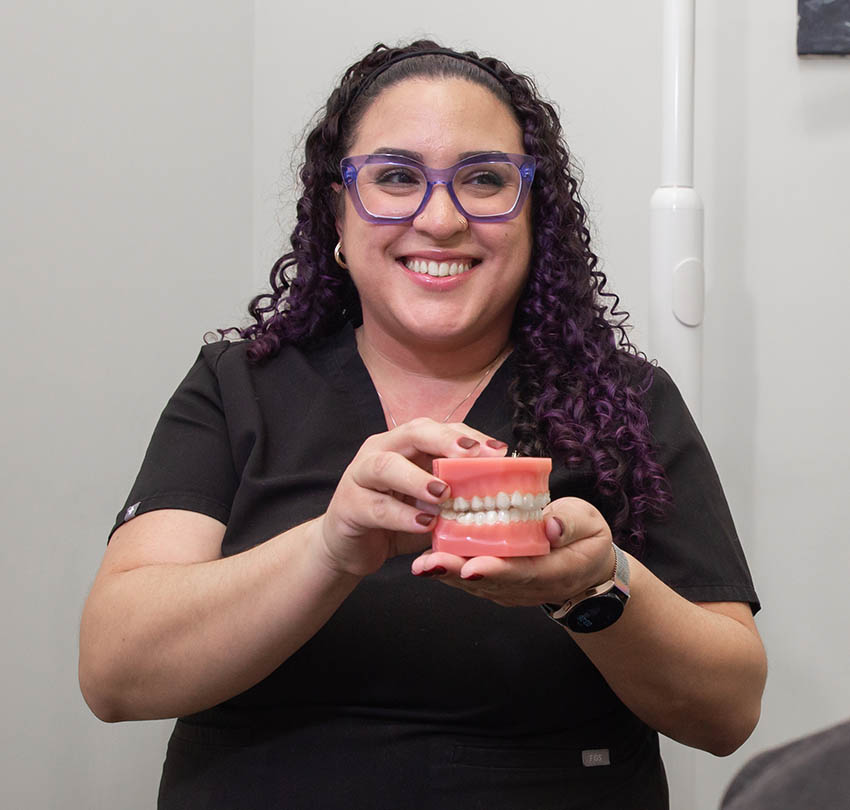
Dr. Kim on restoring damaged and missing teeth
Overview
Dentures can restore the look of a full smile and make eating and speaking easier after teeth are lost, which matters because missing teeth affect appearance, speech and the foods a person is able to choose. A complete, or full, denture replaces every tooth in one jaw on a gum-colored base that rests on the ridge of gum and bone. A partial denture replaces one or more teeth in a jaw that still has natural teeth, usually with clasps that hook around neighboring teeth for stability. Dentures are made from materials such as acrylic, resin, nylon, metal and porcelain.
Timing depends on whether teeth still need to be removed. A conventional complete denture is made and placed once the remaining teeth have been removed and the gums have healed, which may take several months. An immediate denture is placed on the same day the teeth are removed, so there is no stretch of time without teeth. The gums and bone change shape as they heal, so an immediate denture often needs adjusting, relining or replacing within about a year. An overdenture fits over a small number of remaining natural teeth or implants.
The fit of a denture changes over the years because the bone beneath it keeps remodeling. After teeth are lost, the bony ridge that held them shrinks, most quickly in the first six months and then slowly for life, and that shrinkage continues after a denture is made. It affects the lower jaw especially, where it is a major reason dentures become less stable. A denture that once fit well can start to loosen, rub or click, and a reline adds new material to its fitting surface so it matches the gums again. Dentures commonly last about 7 to 10 years before they are replaced.
Dentures can also be held in place by dental implants. An implant-supported denture clips onto two or more implants placed in the jawbone and can still be taken out for cleaning, and a fixed full-arch bridge on implants, often called All-on-X, is a separate treatment. Conventional dentures rest on the gums, with clasps on the remaining teeth for a partial, and involve no implant surgery.
When It's Recommended
- All the teeth missing in the upper jaw, the lower jaw or both
- Several missing teeth in a jaw that still has natural teeth able to support a partial denture
- Teeth planned for extraction, where an immediate denture can replace them on the same day
- Difficulty chewing, speaking clearly or smiling with confidence because of missing teeth
- An existing denture that has become loose, worn, damaged or uncomfortable
- A preference for a removable tooth replacement that does not involve implant surgery
What are the risks of Dentures?
When to Avoid
- Untreated infection or inflammation of the gums or the tissues a denture will rest on, until treated
- Untreated tooth decay or active gum disease in the teeth that will support a partial denture, until treated
Possible risks
- Sore spots, rubbing or ulcers where the denture presses on the gums, most often in the first days and weeks of wear
- Denture stomatitis, an inflammation of the tissue under a denture often linked to yeast (Candida), poor denture hygiene and wearing dentures day and night
- Looseness, slipping, rocking or clicking while eating or speaking, particularly with a lower denture
- Temporary changes in speech and increased saliva while adapting to a new denture
- Continued shrinkage of the jawbone ridge after tooth loss, which loosens the fit over time and can change facial appearance, such as sunken cheeks, and which a poorly fitting denture worn for years can add to
- More plaque and gum inflammation around the teeth that hold a partial denture, and a possibly higher risk of decay, particularly on the roots
- Reduced ability to feel the temperature of hot foods and drinks, which can raise the chance of a burn
- Cracks, breakage or a detached tooth, often after a denture is dropped
- A higher risk of pneumonia in very old adults who sleep with their dentures in
- Excess zinc in the body from overuse of zinc-containing denture adhesives
Who needs extra care
- Recent extractions, because the gums and jawbone change shape for months as they heal, so an immediate denture often needs adjustments and a reline or replacement as healing progresses
- Advanced shrinkage of the jawbone ridge, especially in the lower jaw, which can make a conventional denture less stable, and where relining, adhesive or an implant-retained denture may be considered
- Dry mouth (xerostomia), which can make a denture harder to keep in place and less comfortable, and where a denture adhesive may help
- Natural teeth that support a partial denture, which are associated with more plaque and gum inflammation and possibly a higher risk of decay, particularly on the roots, so daily cleaning and regular checkups are especially important
- Frail older adults and people who rely on a caregiver for mouth care, for whom removing dentures overnight and cleaning both the dentures and the mouth every day are especially important, since sleeping in dentures has been associated with a higher risk of pneumonia in people aged 85 and older
- Reliance on large amounts of denture adhesive, which can be a sign that a denture no longer fits and may need relining or replacing; some adhesives contain zinc, and published denture-care guidance recommends avoiding zinc-containing adhesives as a precaution because overuse could raise zinc levels in the body
What to Expect During Treatment
- A consultation and examination of your mouth, gums and any remaining teeth, including a discussion of complete, partial, immediate and implant-supported options
- Any decay, gum disease or infection is treated first; if teeth need removing, the denture is either made after the gums heal or planned as an immediate denture placed on the day of the extractions
- Impressions or a digital scan record the shape of your gums and remaining teeth, and models of your mouth are made from them
- Wax bite blocks record how your jaws meet and how much of the teeth will show, and the size, shape and shade of the replacement teeth are chosen
- At a try-in visit, the replacement teeth set in wax are placed in your mouth so the fit, bite, appearance and speech can be checked before the denture is finished
- The finished denture is fitted, pressure spots and the bite are adjusted, and how to put it in, take it out and clean it is reviewed with you
- Follow-up visits over the first weeks ease sore spots and fine-tune the fit, and several adjustments are common
- Regular checkups review the fit, the gums and the condition of the denture, and a reline or replacement is arranged when the fit changes
How do Dentures work?
A complete denture is held in place by its close fit against the gums, by a thin film of saliva between the base and the tissue, and by the muscles of the cheeks and tongue. An upper denture covers the roof of the mouth, which gives it a broad surface to hold onto. A lower denture sits on a narrower, horseshoe-shaped ridge with room left for the tongue, so it tends to move more.
- A partial denture uses the remaining natural teeth for support. Clasps hook around neighboring teeth to steady it, while its framework, made of metal, acrylic or a flexible material, carries the replacement teeth across the gaps and its base rests on the gums.
- Chewing forces pass through the denture to the gums and the bone underneath. Because that bone keeps remodeling after tooth loss, the fitting surface of a denture gradually stops matching the ridge. A reline refits the denture by adding new material to the side that touches the gums, and a new denture is made when relining no longer restores a good fit.
- An immediate denture is made in advance from impressions of the mouth and inserted at the appointment where the teeth are removed. As the gums shrink during healing it is adjusted, relined with a temporary material, or replaced once the jaw has settled.
Recovery & Aftercare
- New dentures commonly feel awkward or loose for a few weeks while the cheek and tongue muscles learn to hold them, and getting fully used to them can take weeks or sometimes months
- Sore spots are common in the first 24 to 48 hours of wear and are usually eased at follow-up adjustment visits; if soreness persists or a sore spot does not heal, contact the dental office that made the denture
- Eating tends to go more smoothly if you start with soft foods, cut food into small pieces, chew on both sides of your mouth and avoid biting with your front teeth, which can tip the denture
- Your speech may sound slightly different at first, and reading aloud can help you adjust; saliva flow may also increase for the first few days
- An upper denture can make it harder to feel how hot foods and drinks are, so hot liquids may call for extra care
- Taking your dentures out overnight, or for at least eight hours a day, gives your gums a rest, and keeping them in water or a denture-cleansing solution while they are out stops them drying out and warping
- Brushing your dentures daily with a soft brush and a non-abrasive denture cleanser removes food and plaque, and cleaning them over a sink of water or a folded towel protects them if they slip; toothpaste, bleach and hot or boiling water can damage them
- Brushing your gums, tongue and the roof of your mouth each day, and any remaining natural teeth twice a day, helps keep your mouth healthy
- Adhesive can add stability when used sparingly, and needing more and more of it can be a sign that a reline or a new denture is due
- Regular dental checkups allow the fit, your gums and the denture to be checked; a reline is commonly needed every one to two years, and a denture that feels loose, hurts, clicks when you talk or is damaged is a reason to book a visit
Alternative Treatments
- Implant-supported (snap-in) dentures that clip onto two or more dental implants and can still be removed for cleaning
- A fixed full-arch implant bridge (All-on-X) when all the teeth in a jaw are being replaced
- Dental implants with crowns for one or a few missing teeth
- A conventional fixed bridge anchored to crowns on the neighboring teeth
What the Research Says
- Complete dentures replace all the teeth in the upper or lower jaw, while partial dentures replace one or a few missing teeth[1]
- National survey data suggest that about 15% of U.S. adults aged 65 and older have no remaining natural teeth[7]
- New dentures can feel awkward or loose for a few weeks while the muscles of the cheeks and tongue learn to keep them in place[2]
- After teeth are lost, the jawbone ridge under a denture keeps shrinking, fastest in the first six months and more slowly throughout life, which is a major reason dentures lose stability over time[8]
- Dentures are brushed daily to remove food and plaque, and are kept covered in water when they are out of the mouth so they do not warp[2]
Who provides this at ConfiDental Family and Cosmetic Dentistry

Soo Jin Kim
DDS
Plans and fits dentures, including ones held by implants.
NYU-trained family and cosmetic dentist with a hospital residency at Mount Sinai
Patient reviews
-
“Dr. Kim is my whole family’s dentist!”
– Saeeda b
-
“If I could leave 20 stars I would.”
– Colleen F
-
“Do yourself a favor and book them for any of your dentistry needs.”
– Stephen B
-
“Dr. Kim is so talented. I have trusted her with many procedures over the years.”
– Robert
Frequently Asked Questions
What are dentures?
Do dentures hurt?
Are dentures safe?
How long does it take to get dentures?
What happens when you get dentures?
Who is not a good candidate for dentures?
How long do dentures last?
Can dentures be held in place with implants?
Sources & References
This article draws from 13 peer-reviewed sources.
- [1]MedlinePlus – Dentures
- [2]American Dental Association MouthHealthy – Dentures
- [3]American Dental Association – Denture Care and Maintenance
- [4]Cleveland Clinic – What Are Dentures? Types, Care & Benefits
- [5]NHS – Dentures
- [6]Cambridge University Hospitals NHS Foundation Trust – Denture Care: Looking After Your Dentures
- [7]National Institute of Dental and Craniofacial Research – Tooth Loss in Seniors
- [8]Role of Genetic Polymorphisms in Residual Ridge Resorption of Mandible – A Scoping Review – Jpn Dent Sci Rev (2025), PMC
- [9]Evidence-based guidelines for the care and maintenance of complete dentures: a publication of the American College of Prosthodontists – J Prosthodont (2011), PubMed
- [10]Epidemiology and etiology of denture stomatitis – J Prosthodont (2011), PubMed
- [11]Denture wearing during sleep doubles the risk of pneumonia in the very elderly – J Dent Res (2015), PubMed
- [12]Association of removable partial denture use with oral and systemic health – J Dent (2011), PubMed
- [13]The Impact of Edentulism on Oral and General Health – Int J Dent (2013), PMC