
Traditional Braces
Traditional braces straighten crooked, crowded, or gapped teeth and correct bite problems such as overbites, underbites, crossbites, and open bites. Small metal or tooth-colored ceramic brackets are bonded to the teeth and joined by a thin archwire, which applies steady, gentle pressure that moves the teeth into place over about 12 to 24 months. The braces stay on for the whole treatment and are adjusted at regular visits, and a retainer holds the result afterward. Braces can also guide an upper canine that is stuck in the bone (an impacted canine) into its place after the tooth is surgically uncovered, which keeps the tooth in the mouth. At ConfiDental in Carlstadt we place both full braces and short-term braces that straighten only the front teeth.
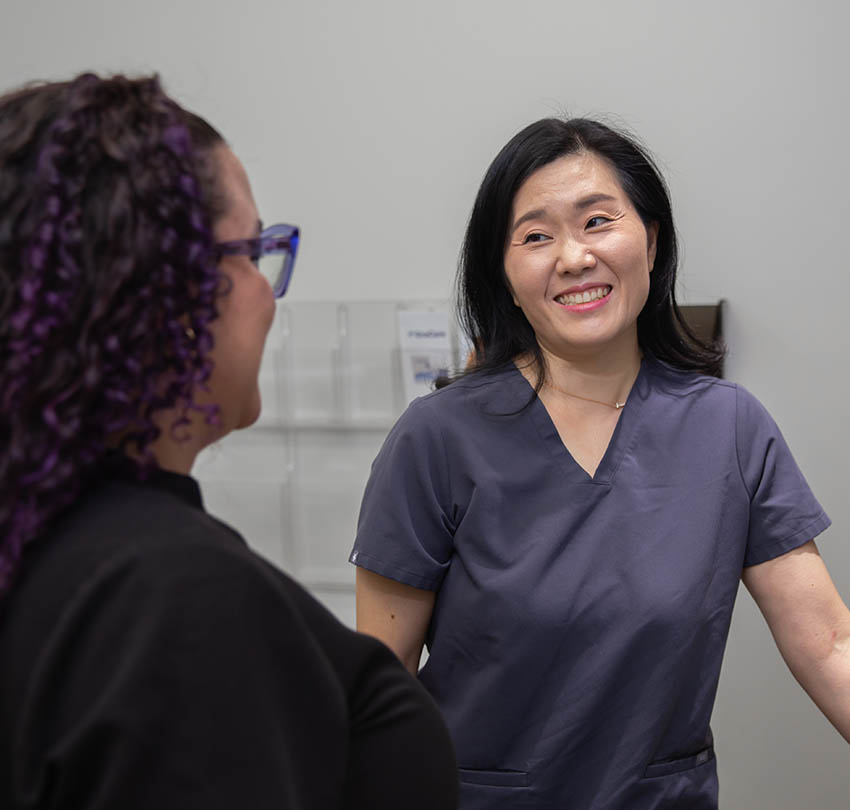
Who you'll see
-

Soo Jin Kim, DDS
NYU-trained family and cosmetic dentist with a hospital residency at Mount Sinai
Treats patients with full and short-term braces as part of her orthodontic work.
- Dental degree
- DDS, New York University, Omicron Kappa Upsilon honor society
- Residency
- Icahn School of Medicine at Mount Sinai
-

Sung Min Lee, DDS
Board-certified periodontist specializing in gum disease treatment and dental implant surgery
Performs canine exposure, uncovering an impacted canine for the braces to guide into place.
- Board certified
- American Board of Periodontology, 2023
- Specialty training
- Periodontics residency, Columbia University
Dr. Kim offers both braces and Invisalign; in her experience, teenagers tend to like traditional braces, while busy adults lean toward Invisalign.
Patient reviews
-
“My 12 year old daughter likes going to the dentist.”
– Massiel Melo S
-
“Not only did they exemplify professionalism but were also extremely friendly and thorough during the entire process.”
– Stephen B
-
“Dr. Kim is my whole family’s dentist!”
– Saeeda b
-
“I’ve already recommended this office to multiple friends and family because of the positive experience.”
– Yoanny B
Dr. Kim on orthodontics
Overview
Braces treat teeth that are crowded, crooked, or spaced apart, and bites where the upper and lower teeth do not meet properly, including overbites, underbites, crossbites, and open bites. A bracket is bonded to each tooth, an archwire links the brackets, and the whole system stays in place until the teeth reach their planned positions. Treatment often begins between ages 8 and 14, and healthy teeth can be moved at any age, so braces are worn by adults as well as by children and teens.
Metal braces use stainless steel brackets. Ceramic braces use tooth-colored or clear brackets that blend with the teeth and work the same way, though they are more fragile and more likely to break. Because braces are fixed to the teeth, they work around the clock, and progress does not depend on remembering to put an appliance back in. Clear aligners such as Invisalign are removable and harder to see, but they move teeth only while they are worn; braces are often used for more complex movements, such as moving roots, raising or lowering teeth, and closing large spaces.
Life with braces involves adjustment visits every four to six weeks, when wires are changed and progress is checked. Elastics stretched between the upper and lower brackets may be added to correct the bite. Hard and sticky foods can bend wires or loosen brackets, and food collects easily around the brackets, so cleaning the teeth takes more care than usual. When the braces come off, a removable or fixed retainer holds the teeth in their new positions.
Braces can also bring in an upper canine (eye tooth) that has not erupted. The upper canine usually comes in between ages 11 and 13, but it sometimes develops out of position, often lying in the roof of the mouth behind the front teeth. Left in place, it may not erupt normally and can damage the roots of the neighboring front teeth or push them out of position. In a short surgical procedure, the gum over the tooth is opened and a small bracket attached to a fine chain is bonded to it. The chain is linked to the braces, which apply light, steady pull to guide the canine down into its place in the arch. This saves the canine from removal, and treatment that includes this step commonly takes two to three years.
When It's Recommended
- Crowded or overlapping teeth
- Gaps or spacing between teeth
- Crooked or rotated teeth
- Overbite or deep bite, where the upper front teeth extend well over the lower ones
- Underbite, where the lower front teeth sit in front of the upper teeth
- Crossbite, where some upper teeth sit inside the lower teeth when the jaws close
- Open bite, where the front or side teeth do not meet when the back teeth are together
- An upper canine that has not erupted on its own (impacted canine), once it has been surgically uncovered
- Complex tooth movements, such as closing spaces left by extractions, moving roots, or raising or lowering teeth
- Moving teeth into position before dental implants, bridges, or other restorative work
What are the risks of Traditional Braces?
When to avoid
- Active, untreated gum disease (periodontitis) or tooth decay, until it is brought under control
- Oral hygiene that cannot keep plaque under control around fixed brackets, until it improves
Possible risks
- Soreness, pressure, or tenderness of the teeth for a few days after the braces are placed and after adjustments
- Irritation, sores, or small cuts on the lips, cheeks, or tongue from brackets and wires
- White spot lesions (early mineral loss from the enamel) and tooth decay around the brackets when plaque is not cleared
- Gum inflammation (gingivitis) and swollen gums around the brackets
- Root resorption (shortening of the tooth roots), a recognized risk of orthodontic tooth movement that is more likely with heavy forces
- Loose or broken brackets, bands, or wires, including a wire end that pokes the cheek
- Chipping or fracture of ceramic brackets, which are more fragile than metal ones
- Allergic reaction to nickel in metal brackets and wires, or to latex in elastics
- Jaw discomfort and temporary difficulty chewing or speaking while adjusting to the braces
- Treatment that takes longer than planned when elastics are not worn as directed or appointments are missed
- Relapse, with teeth drifting back toward their old positions if retainers are not worn after treatment
- Soreness, swelling, bleeding, or infection at the surgical site after exposure of an impacted canine
- Detachment of the bracket or chain bonded to an exposed canine, which may need a repeat procedure
- An impacted canine that does not move into place with traction, which may then need to be removed
Who needs extra care
- Bite problems caused by the size or position of the jaws may call for braces combined with jaw surgery
- Nickel allergy is reviewed before treatment, because many metal brackets and wires contain nickel; nickel-free or ceramic brackets and alternative wires may be used
- A history of gum disease calls for stable gum health before tooth movement begins and closer periodontal monitoring during treatment
- Dental implants do not move with orthodontic force, so the plan is built around them, and brackets bond differently to crowns, bridges, and veneers than to natural enamel
- Teeth with short roots or earlier root resorption may be monitored with X-rays during treatment and moved with lighter forces
What to Expect During Treatment
- At the consultation, we check your teeth, gums, jaws and bite. Digital X-rays, photographs and an intraoral scan (a digital impression) record the starting position of your teeth. We then discuss whether braces or clear aligners suit your case
- Your treatment plan explains how we will move the teeth with traditional brackets, whether extra space is needed (sometimes by removing teeth), and whether short-term braces on the front teeth would be enough
- We may place small elastic spacers between some back teeth a few days before the braces go on, to make room for metal bands around those teeth
- At the bonding visit, which takes one to two hours, we clean and dry your teeth, attach a bracket to each tooth with dental adhesive set by a light, and may fit bands around some back teeth
- We thread a thin archwire through the brackets and hold it with small elastic bands in colors you choose, then give you instructions for brushing, flossing, and foods to avoid
- You come back every four to six weeks for adjustments, when we change or reshape the wires, replace the ties, and check your progress; we may add elastics between the upper and lower teeth to correct the bite
- If an upper canine is impacted, Dr. Lee uncovers the tooth in a short surgical procedure and bonds a small bracket and chain to it, and the chain is connected to the braces, which guide the tooth into line over the following months
- When the teeth and bite reach their planned positions, we remove the brackets and bands and polish off the remaining adhesive
- At that same appointment we fit your retainer, either a removable one or a thin wire bonded behind the front teeth, to hold the teeth in their new positions
- Follow-up visits check the retainer and the stability of the result
How do Traditional Braces work?
Braces move teeth with light, continuous pressure. A small bracket is bonded to the front of each tooth, and a thin archwire runs through a slot in every bracket. As the wire works back toward its original shape, it pushes and pulls on each tooth. Small elastic ties (ligatures) hold the wire in place, or, on self-ligating brackets, a built-in clip does the same job.
- That pressure acts on the ligament and bone around each tooth root. Bone breaks down on the side the tooth is pressed toward and rebuilds behind it, so the tooth moves through the bone a little at a time. Light forces are favored, since heavy forces have been linked with more shortening of the roots (root resorption).
- Treatment usually runs in stages. Thin, flexible wires first level and align the teeth. Progressively stiffer wires then close spaces and correct the bite, often with elastics (small rubber bands) stretched between the upper and lower brackets. A finishing stage fine-tunes the position of individual teeth. Because each bracket gives a firm hold on its tooth, braces can move roots as well as crowns.
- For an impacted canine, the braces provide the anchor that guides the tooth in. After the canine is surgically uncovered, a small bracket or eyelet with a fine gold chain is bonded to it. In a closed exposure the gum is stitched back over the tooth with the chain passing through it; in an open exposure the gum over the crown is removed so the tooth stays visible. The chain or bracket is connected to the archwire, and light, steady traction draws the canine down into its place in the arch. A Cochrane review found the open and closed techniques similarly successful at exposing the tooth.
Recovery & Aftercare
- Soreness after the braces go on, and after each adjustment, usually eases within a few days; soft foods and over-the-counter pain relief can help in the meantime
- The lips, cheeks, and tongue usually adjust to the brackets within the first few weeks, and orthodontic wax over a rough bracket or wire can ease rubbing
- You can protect the braces by avoiding hard, sticky, and chewy foods such as popcorn, nuts, caramel, chewing gum, corn on the cob, and whole apples, and by cutting firm fruits and vegetables into small pieces
- Brushing at least twice a day with a soft-bristled brush and fluoride toothpaste, and cleaning between the teeth daily with floss threaders or small interdental brushes, helps prevent decay and gum irritation around the brackets
- After surgical exposure of an impacted canine, soreness is common for a few days and swelling is usually minimal; the chain needs care when eating for the first few weeks, and dissolving stitches usually disappear within about two weeks
- If a bracket comes loose, a wire breaks or pokes your cheek, or pain is not relieved by over-the-counter medication, contact the office that placed your braces
- Retainer wear continues long after the braces come off, because teeth tend to drift back toward their original positions without one
Alternative Treatments
- Invisalign or other clear aligners, removable plastic trays used for many mild to moderate problems
- Lingual braces bonded to the back surfaces of the teeth
- Removable or functional appliances for some bite problems in growing children
- Orthodontic treatment combined with jaw surgery for bite problems caused by the size or position of the jaws
- Veneers or bonding to improve the look of mildly crooked teeth without moving them
- For an impacted canine, removal of the tooth, with the space closed or later filled with a replacement tooth such as an implant
- No treatment, since many minor differences in tooth position need none
What the Research Says
- Braces use brackets bonded to the teeth and joined by a thin archwire, which applies mild, constant pressure that shifts the teeth into position over time[1]
- A 2016 systematic review of 22 studies estimated that comprehensive treatment with fixed braces takes about 20 months on average[5]
- Healthy teeth can be moved orthodontically at any age, so braces are an option for adults as well as for children and teens[3]
- An upper canine displaced into the roof of the mouth can be surgically uncovered and then guided into its place in the arch with fixed braces, a course that commonly takes two to three years[7]
- Without a retention phase after braces, teeth tend to drift back toward their original positions, so fixed or removable retainers are fitted to hold them[6]
A patient on straightening their teeth at ConfiDental
Frequently Asked Questions
What are traditional braces?
Do braces hurt?
Are braces safe?
How long do you have to wear braces?
What happens when you get braces put on?
Who should not get braces?
What happens if a canine tooth does not come in?
Can I choose the color of my braces?
Are there braces that only straighten the front teeth?
Are braces cheaper than Invisalign?
Sources & References
This article draws from 11 peer-reviewed sources.
- [1]Cleveland Clinic – Braces
- [2]American Association of Orthodontists – Braces
- [3]American Dental Association MouthHealthy – Braces
- [4]MedlinePlus – Malocclusion of teeth
- [5]How long does treatment with fixed orthodontic appliances last? A systematic review (American Journal of Orthodontics and Dentofacial Orthopedics, 2016)
- [6]Retention procedures for stabilising tooth position after treatment with orthodontic braces (Cochrane Review, 2023)
- [7]Open versus closed surgical exposure of canine teeth that are displaced in the roof of the mouth (Cochrane Review, 2017)
- [8]Cambridge University Hospitals NHS Foundation Trust – Exposure of impacted upper canine
- [9]Orthodontic treatment in impacted maxillary canines. A review of the literature (Revista Cientifica Odontologica, 2021)
- [10]Root resorption associated with orthodontic tooth movement: a systematic review (American Journal of Orthodontics and Dentofacial Orthopedics, 2010)
- [11]Critical evaluation of incidence and prevalence of white spot lesions during fixed orthodontic appliance treatment: A meta-analysis (Journal of International Society of Preventive and Community Dentistry, 2015)