TMJ Treatment with Botox
Last updated: November 22, 2026 Reviewed by Soo Jin Kim, DDS
If your jaw aches from clenching or grinding, Botox can ease that pain by relaxing the chewing muscles, for a few months after each treatment. Relaxing those muscles can also take some of the force out of the clenching and grinding itself (bruxism). During a short appointment, we inject small doses of botulinum toxin type A into your chewing muscles, most often the masseter, which sits at the angle of your jaw, and sometimes also the temporalis at your temple. Injections are usually considered once simpler options like self-care, jaw exercises and a night guard haven't brought you enough relief, and in our office a custom night guard comes first; the two can also be used together. In the United States, the FDA has approved botulinum toxin for conditions such as chronic migraine but not for temporomandibular disorders (TMD) or bruxism, so this use is off-label.

Who You'll See
-
Soo Jin Kim, DDS
Family and cosmetic dentist
Offers Botox injections to patients whose TMJ pain continues despite a night guard.
- Dental degree
- DDS, New York University, Omicron Kappa Upsilon honor society
- Residency
- Icahn School of Medicine at Mount Sinai
Dr. Kim treats TMJ pain herself, from the night guard through any Botox injections.
Patient reviews
-
“Always on time with our appointments, clean, and knowledgeable.”
– Saeeda b
-
“Dr. Kim is so talented. I have trusted her with many procedures over the years.”
– Robert
-
“I love how thoroughly Dr. Kim answers all my questions.”
– Isabella F
-
“My consultation was like no other.”
– Colleen F
Dr. Kim on Botox treatments
Overview
The injections go into the chewing muscles that move your jaw joint, and that joint is where the name comes from: TMJ is short for temporomandibular joint, the hinge that connects your lower jaw to your skull. Temporomandibular disorders (TMD) cover pain in that joint and in the chewing muscles that move it, along with problems in how they work. We place the injections mainly in the masseter, the thick muscle at the angle of your jaw that tightens when you clench your teeth, and sometimes in the temporalis, the fan-shaped muscle at your temple, to relax them when they are overworked. Many people use "Botox" as a general name for botulinum toxin type A, which is sold under several brand names.
The National Institute of Dental and Craniofacial Research (NIDCR) notes that TMD symptoms often clear up on their own, and that experts recommend conservative treatments, among them eating soft foods, using heat or cold, doing gentle jaw exercises, cutting back on clenching and on chewing gum, practicing relaxation techniques, and wearing an oral appliance. None of that simpler care makes a permanent change. If heavy clenching and grinding (bruxism) or jaw-muscle pain hasn't settled with it, injections are generally considered. Jaw pain can also start inside the joint itself, from arthritis or from a displaced disc, so before we consider injections, we examine your jaw to help work out whether the pain is coming mainly from your chewing muscles.
Your night guard and the injections each handle a different part of the problem. The guard, an appliance you wear over your teeth, takes the wear from grinding, and the injections turn down how hard your jaw muscles can contract. For teeth grinding, the injections lowered biting force more than oral splints, which are also worn over the teeth, did in the first few months, and the splints held their effect for longer. People with painful TMD had less pain with botulinum toxin type A at 4 weeks and again at 24 weeks, and in the women with persistent jaw-muscle pain who were treated, it reduced pain at least as well as an oral appliance over 24 weeks.
What to Expect During Treatment
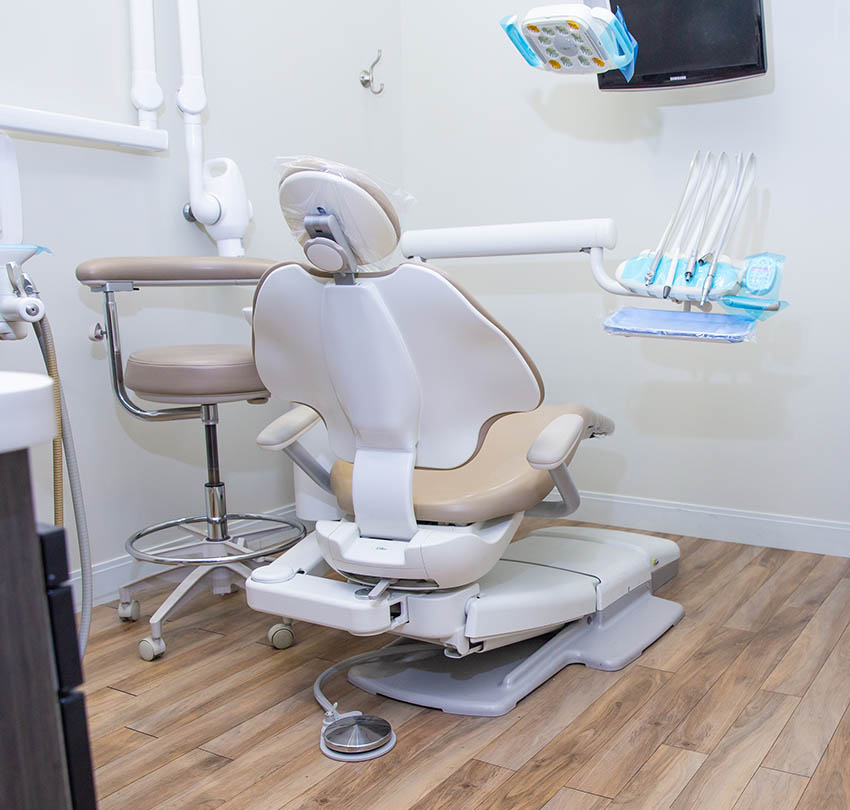
- Before Botox, we start with a custom night guard; injections are considered when the guard has not relieved your TMJ pain, most often when that pain is keeping you from sleeping
- We review your jaw symptoms, medical history, medicines, allergies, pregnancy or breastfeeding, and any previous botulinum toxin treatment, including cosmetic injections
- We examine the jaw muscles and joints, which may include feeling the muscles while you clench your teeth, checking how wide your mouth opens, and looking for signs of tooth wear
- To help you decide, we explain the treatment goals, its off-label use, when relief may begin, possible side effects and alternatives, including continuing with the night guard alone. You give your consent before treatment
- We clean the skin over the injection sites, which may be marked
- Topical numbing cream or ice may be used first for comfort. We use a very fine needle to place several small injections into each masseter muscle and sometimes the temporalis, usually on both sides. The injections take about 15 minutes
- You leave with aftercare instructions and a plan for follow-up
- At a follow-up visit, often a few weeks later, we review the effect and decide whether a future round should use a different dose or treat different muscles. Further rounds usually come every three to four months
Risks
When to avoid
- Known allergy or hypersensitivity to any botulinum toxin product or to any ingredient in the formulation
- Infection at the planned injection sites
- Pregnancy or breastfeeding, during which elective botulinum toxin injections are generally put off
Possible risks
- Pain, tenderness, swelling, redness, or bruising at the injection sites
- Temporary chewing weakness or jaw fatigue, particularly with tough or chewy foods, which tends to recover as the toxin wears off
- Changes to facial contour, such as a slimmer or narrower lower face as the treated masseter muscles become thinner
- An uneven smile (smile asymmetry) or a change in facial expression if the toxin affects nearby facial muscles, usually temporary
- Paradoxical bulging, in which untreated fibers of the masseter bulge more prominently during chewing
- Headache, tiredness, or dry mouth
- Reduced thickness or volume of bone in parts of the jaw, including the jaw joint, reported on imaging after injections into the chewing muscles, more often at higher doses
- Spread of the toxin's effect beyond the injection site, the subject of an FDA boxed warning, which can cause generalized weakness, double vision, drooping eyelids, hoarseness, or difficulty swallowing or breathing hours to weeks after injection; swallowing and breathing difficulties can be life threatening
- Allergic reactions, including rare serious reactions such as anaphylaxis (a severe, whole-body allergic reaction)
- This is not an exhaustive list, and individual risks depend on the dose, the muscles injected, and the person's health
Who needs extra care
- Neuromuscular disorders (conditions that affect how nerves control muscles) such as myasthenia gravis, Lambert-Eaton syndrome, amyotrophic lateral sclerosis (ALS), or peripheral motor neuropathy, which the FDA label identifies as raising the risk of serious effects, including severe swallowing and breathing difficulty, and which call for monitoring when botulinum toxin is given
- Existing swallowing or breathing problems, which may make swallowing or breathing complications more likely
- Aminoglycoside antibiotics, curare-like drugs, and other medicines that interfere with nerve-to-muscle signaling, which can strengthen the toxin's effect and are combined with it only with caution; muscle relaxants can add to the weakness, and anticholinergic drugs taken afterward may increase anticholinergic side effects
- A botulinum toxin injection for any other purpose, including cosmetic treatment, within the past several months, because doses given close together can add to muscle weakness and the effect of combining different products is unknown
- A bleeding disorder or blood-thinning medicine, which can make bruising at the injection sites more likely
When It's Recommended
- Pain in your jaw muscles (myofascial pain) that comes with a TMJ problem (temporomandibular disorder), particularly when simpler care has not settled it
- Clenching or grinding your teeth in your sleep, or while you're awake (awake bruxism), with jaw pain that a night guard has not relieved
- A jaw that is sore or tight in the morning, or pain at your temples, linked to clenching or grinding
- Clenching or grinding with jaw pain that is still there after you have worn a custom night guard consistently
How It Works
Botulinum toxin type A works by blocking the release of acetylcholine, the chemical signal a nerve sends to tell a muscle to contract. When we inject a measured dose into your jaw muscle, it partly reduces that muscle's activity where it goes, without paralyzing it completely.
- Your masseter and temporalis are the main muscles that close your jaw, and they drive clenching and grinding. When they can't contract as hard, they put less load on themselves, on your teeth and on your jaw joint, which is the reason the injections are used for muscle-related jaw pain and bruxism.
- For grinding during sleep (sleep bruxism), the injections change how forcefully the muscles contract, not the sleep-related process that sets off grinding episodes. In the people who had a single round of masseter injections, the masseter worked less intensely during sleep for 12 weeks, so grinding episodes can still happen, with less force behind them.
- The effect is temporary, because in the months after your injections the nerve endings build new connections with the muscle, and the muscle slowly regains its activity. That return of muscle activity is why you may have the injections again.
- Each botulinum toxin product measures its doses in its own units, and those units can't be converted between brands, so your dose is planned for the particular product used.
Recovery & Aftercare
- You can usually return to work and normal activities straight after the appointment
- You may notice mild tenderness, redness, or a small bruise at the injection sites for a few days
- Relief builds gradually over the first few weeks, not right after the injections, and we often schedule a follow-up visit to review the effect
- Tough or chewy foods may tire your jaw for a few weeks while the muscles are relaxed; in the patients who were treated, how well they could chew dipped after the injections and had recovered by 90 days
- Get medical care right away if you notice trouble swallowing, speaking, or breathing, or new muscle weakness elsewhere in the body, in the hours to weeks after injection, as the FDA label advises