
Crowns and Bridges
Last updated: November 22, 2026 Reviewed by Soo Jin Kim, DDS
When a tooth is broken, worn, weakened or missing, a crown or bridge can help you chew comfortably and get a natural-looking smile back. A crown is a cap shaped like a tooth that covers a damaged tooth above the gumline and gives back its shape, size and strength. A bridge fills the space left by one or more missing teeth with artificial teeth, held in place by crowns on the neighboring teeth, by wings bonded to the backs of those teeth, or by dental implants. Each one is custom-made to fit, and placing it usually takes two visits. We place dental crowns, bridges, inlays and onlays at ConfiDental in Carlstadt, and if a tooth has just broken, we can protect it with a temporary crown that same day.

Who You'll See
-
Soo Jin Kim, DDS
Family and cosmetic dentist
Restores broken, worn and missing teeth with crowns, bridges, inlays and onlays.
- Dental degree
- DDS, New York University, Omicron Kappa Upsilon honor society
- Residency
- Icahn School of Medicine at Mount Sinai
Almost all the crowns and bridges Dr. Kim places are made without metal. She trained in how they are made, too, with a degree in dental laboratory technology from New York City College of Technology.
Patient reviews
-
“Dr. Kim is so talented. I have trusted her with many procedures over the years.”
– Robert
-
“I’ve already recommended this office to multiple friends and family because of the positive experience.”
– Yoanny B
-
“Everyone is so friendly and I always feel like I’m treated with care.”
– Isabella F
-
“This practice from the front desk to Dr.Kim and everyone in between has been top notch.”
– Colleen F
Dr. Kim on crowns and bridges
Overview
When a tooth has lost too much of its structure for a filling to hold, we rebuild it with a dental crown, and where teeth are missing, we fill the space with a dental bridge. The tooth may have a large cavity or a large old filling, it may have cracked, broken or worn down from grinding, or it may have had root canal treatment. A crown covers the entire visible tooth, so it holds together what is left and helps protect the tooth from breaking. Among patients followed over the long term after root canal treatment, the teeth left without a crown were lost at about six times the rate of the crowned ones. Crowns also cover teeth that are badly shaped or discolored, sit on top of dental implants, and hold bridges in place.
You have several materials to pick from for a crown. All-ceramic crowns, which include zirconia and lithium disilicate, match the color of your own teeth, and they are an option if you are allergic to metal. A porcelain-fused-to-metal crown has a strong metal base under a tooth-colored layer of porcelain, and that porcelain can chip over time. Gold and other metal crowns rarely chip and need the least tooth taken away, but they do not look like natural teeth, which is why they are often picked for back molars. When a zirconia or lithium disilicate crown is made from a single solid block, it has shown fewer ceramic fractures and less chipping than one with a layered porcelain surface.
Bridges most often fill a gap of one to three missing teeth in a row. The artificial teeth in a bridge are called pontics, and the supports they are attached to are called abutments. A traditional bridge uses crowns on healthy teeth on both sides of the gap as its abutments. If you have a natural tooth on just one side, a cantilever bridge is anchored by a crown on that side alone, and it is not as strong as a traditional bridge. A resin-bonded bridge, also called a Maryland bridge, is mainly used for front teeth: its pontic is held by wings bonded to the backs of the teeth next to the gap, where a traditional bridge uses crowns. By one estimate, about 91% of resin-bonded bridges were still in place after 5 years, and survival was highest for zirconia bridges held by a single wing.
Filling the space gives you back your chewing and speech, and it helps stop the teeth on either side from shifting into the gap. When you are missing several teeth, a removable partial denture is another option for replacing them. An implant-supported bridge sits on dental implants, not on your own teeth, and it is often chosen when you are missing three or more teeth in a row; the implants are a separate treatment of their own. Compared with a bridge held by your own teeth (a tooth-supported bridge), implants also replace the roots, help preserve your jawbone and generally last longer. A bridge on your own teeth needs no surgery, and it is usually finished within a few weeks.
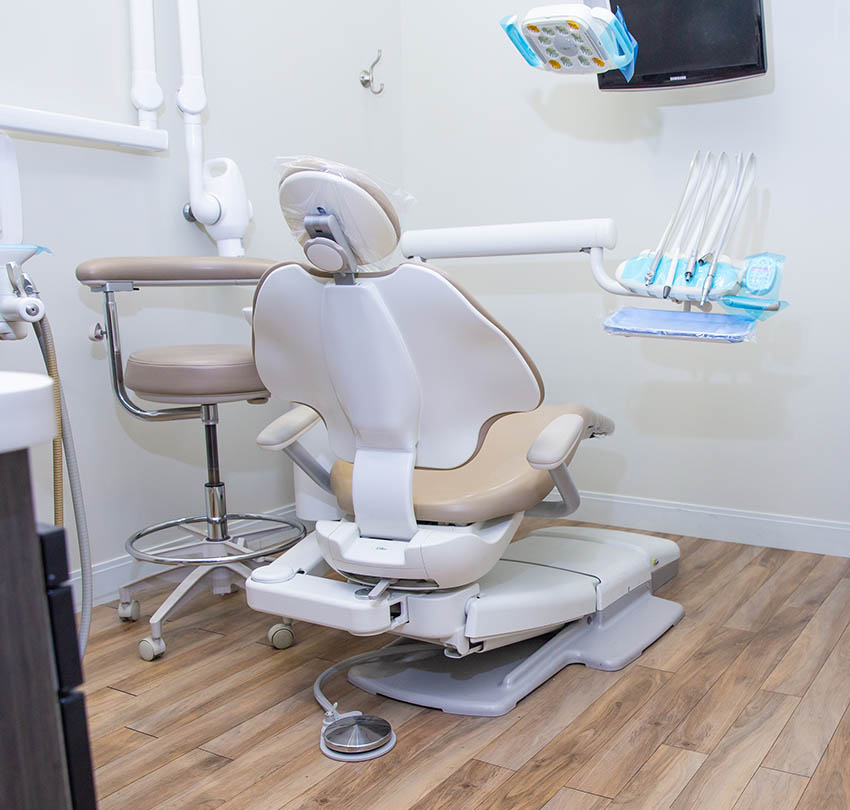
What to Expect During Treatment
- We examine the tooth, your gums and, for a bridge, the teeth on each side of the gap, and help you choose the type of restoration and the material
- Any gum disease is treated first
- We numb your tooth and the gum around it with a local anesthetic
- We remove any decay or old filling material, and a tooth that has lost a lot of structure may be built up with filling material
- The tooth is reshaped so the crown can fit over it; for a traditional bridge, each anchoring tooth is shaped the same way
- A small handheld intraoral scanner records the prepared teeth and your bite as a digital impression. We match the shade to your neighboring teeth, and your crown or bridge is made from the scan
- You leave with a temporary crown or bridge protecting the prepared teeth while the final restoration is made
- At your second visit, we take off the temporary and check the final crown or bridge on your teeth for fit, shape and color
- We cement or bond it in place and may take an X-ray to check the fit; for a resin-bonded bridge, we etch the backs of the neighboring teeth and bond its wings there with resin cement
- Last, we check and adjust your bite, and if you have a bridge, we show you how to clean under it with floss threaders or small interdental brushes
Risks
When to avoid
- A tooth too badly decayed or broken down for a crown to offer a predictable outcome, where extraction and replacement may be considered instead
- Neighboring teeth that are not strong enough to anchor a tooth-supported bridge
- Active, untreated gum (periodontal) disease around the tooth or the planned anchor teeth, until treated
Possible risks
- Permanent removal of tooth structure when a tooth is shaped for a crown or a bridge anchor, which makes the preparation irreversible (it cannot be undone)
- Tooth sensitivity to heat and cold, most often in the first few weeks
- Irritation of the tooth's nerve (pulp), which may need root canal treatment
- Decay at the edge of a crown or on an anchoring tooth
- Chipping, cracking or fracture of porcelain or ceramic
- Loosening or loss of a crown or bridge, which may need re-cementing or replacement
- Debonding (the bond coming loose) of a resin-bonded (Maryland) bridge, its most frequently reported complication
- Fracture of an anchoring tooth, particularly one that is weakened
- Gum inflammation where plaque collects around crown edges or under a bridge
- Wear of the opposing teeth (the teeth that bite against the crown or bridge) from porcelain surfaces
- A temporary crown or bridge loosening or coming off before the final restoration is placed
- Allergic reaction to a dental alloy, which is rare
Who needs extra care
- Teeth grinding or clenching (bruxism), which adds load to crowns and bridges and is often managed with a night guard or bite splint to help protect them
- Allergy to metals used in some dental alloys, where an all-ceramic crown or bridge may be chosen instead
- A tooth with little remaining structure, which may be built up with filling material before it is shaped for a crown
- A tooth with deep decay near the nerve, which may need root canal treatment before the crown is placed, or later if the nerve becomes irritated
- Gaps in the back of the mouth, where a traditional bridge or an implant-supported option is generally used instead of a resin-bonded (Maryland) bridge, which is not strong enough for the chewing forces there
- Younger people, in whom bridges are generally not placed before about age 17 or 18, with exceptions such as a resin-bonded (Maryland) bridge when a child loses a permanent tooth
- Same-day crowns milled in the office, which are not suited to every tooth, so a lab-made crown over two visits may be used instead
When It's Recommended
- A tooth with a big cavity or a large filling, where too little tooth is left to hold a filling
- A tooth that has cracked, chipped or broken
- A tooth worn down from grinding or clenching
- A tooth that has had root canal treatment and needs protecting from breaking
- A tooth that is discolored or badly shaped
- A dental implant that needs a crown on top
- A gap of one or more missing teeth, most often one to three next to each other, where the teeth at one or both ends can support a bridge
- A missing front tooth, which may be replaced with a resin-bonded (Maryland) bridge
How It Works
A crown covers the whole visible part of your tooth, like a cap made to fit it. We reshape the tooth so the crown can fit over it, then cement or bond the crown in place. That brings back the tooth's shape and size and helps hold a weakened tooth together so it can take the force of chewing.
- A bridge spans the gap. Its artificial tooth (the pontic) sits where your missing tooth was, held up by crowns, bonded wings or implants that act as its supports (abutments). Once a fixed bridge is cemented or bonded in, it stays put, and you cannot take it out at home. Bridges can be made of porcelain, ceramics, gold, other alloys, or a mix of these. We replace a single missing tooth as well as several, since even one gap in your teeth can make chewing harder.
- Your crown or bridge is custom-made for the teeth we have prepared. At a dental lab, making one usually takes about two to four weeks. Some offices use computer-aided design and manufacturing (CAD/CAM) to design a crown and mill it on site, so it can go in during a single visit.
- Where the crown meets your tooth, the fit at the edge matters for how long it lasts. A close fit leaves only a small gap for plaque to collect in, and a poorly fitting edge has been linked to plaque buildup, new decay and gum inflammation. Edges placed at or above the gumline are generally easier for you to keep clean.
Recovery & Aftercare
- It is common for your tooth to feel sensitive to heat and cold in the first few weeks, and that usually fades
- Give yourself a few days to get used to a new crown; that is normal. With a new bridge, the teeth and gums around it usually heal within one to two weeks, and the bridge itself can take longer to feel fully comfortable
- To help keep a temporary crown from coming loose, slide floss out to the side rather than lifting it, avoid sticky foods and chew on the other side
- Brushing twice a day with a fluoride toothpaste and flossing daily help prevent decay at the edges of your crown and on anchoring teeth
- Each day, clean under a bridge with floss threaders or small interdental brushes, which reach the area under the pontic (the artificial tooth) that ordinary flossing misses
- Stay away from very sticky foods, very hard nuts, hard candy and ice, and don't chew on pens or your fingernails; that lowers the risk of your crown or bridge chipping or coming loose
- A night guard, if you grind or clench your teeth, helps protect crowns and bridges
- Regular checkups and cleanings let us check your crown or bridge, its edges and the surrounding gums over time
- Crowns and bridges commonly last about 5 to 15 years, and many last longer with good care
- If your bite doesn't feel right, your temporary falls off, the swelling is getting worse, or over-the-counter pain medicine isn't helping, call us