
Emergency Dentistry
When a tooth breaks, a toothache will not ease, or a tooth is knocked out, emergency dentistry relieves the pain, brings a dental infection under control, and improves the chance that a knocked-out, broken, or loosened tooth can be saved, with care arranged promptly once the problem starts. We see most dental emergencies the same day. An urgent visit finds the cause, eases the pain, and stabilizes the tooth, for example by draining an abscess, placing a temporary filling or crown, re-cementing a crown that has come off, or splinting a replanted tooth. Definitive treatment such as root canal therapy, a permanent crown, or an extraction may follow at the same visit or at a planned return visit. Some situations belong in a hospital emergency department first, including facial or neck swelling that affects breathing or swallowing, bleeding from the mouth that does not stop with pressure, and a suspected broken jaw.
Who you'll see
-

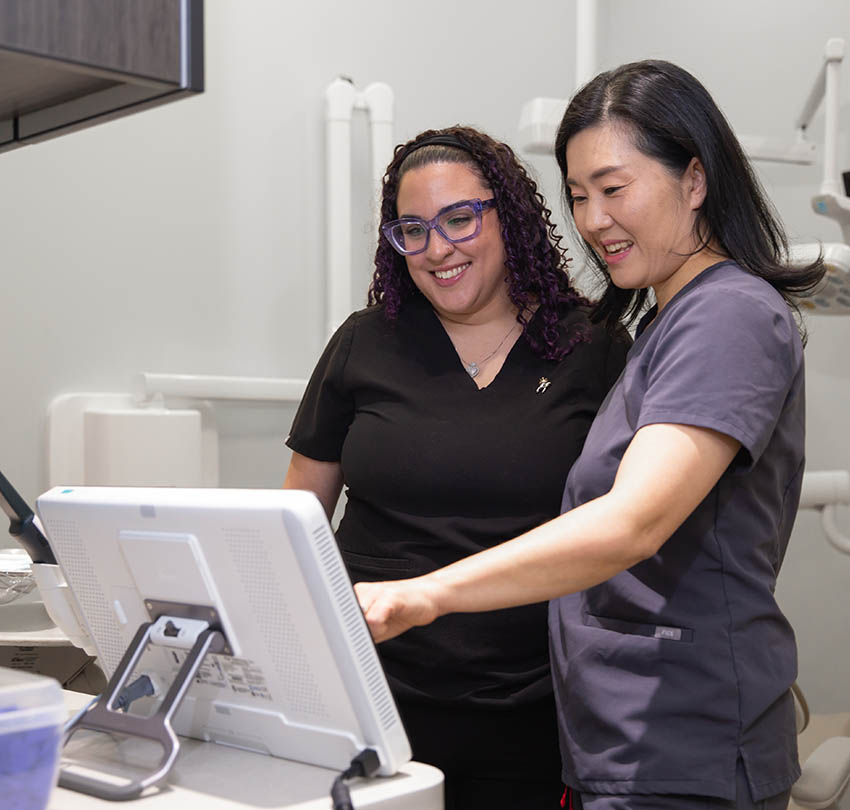
Soo Jin Kim, DDS
NYU-trained family and cosmetic dentist with a hospital residency at Mount Sinai
Sees patients with urgent dental problems, most of them on the same day.
- Dental degree
- DDS, New York University, Omicron Kappa Upsilon honor society
- Residency
- Icahn School of Medicine at Mount Sinai
Dr. Kim is the emergency dentist you see for a cracked tooth or a toothache that keeps you awake, and once the urgent part is over, she also does the fillings and crowns that finish the repair.
Patient reviews
-
“From the first phone call, politeness and quickness to get an appointment, I felt good vibes from the get go.”
– Colleen F
-
“Dr. Kim is so talented. I have trusted her with many procedures over the years.”
– Robert
-
“I love how thoroughly Dr. Kim answers all my questions.”
– Isabella F
-
“Not only did they exemplify professionalism but were also extremely friendly and thorough during the entire process.”
– Stephen B
Dr. Kim on dental emergencies
Overview
A dental emergency is a tooth or mouth problem where waiting for a routine appointment risks more pain, a spreading infection, or losing the tooth. Common reasons for an urgent visit include a severe or throbbing toothache, a dental abscess (a pocket of pus from a bacterial infection, often showing as gum swelling or a pimple-like bump), a tooth that is knocked out, loosened, cracked, or broken, a lost filling or crown, and cuts to the lips, tongue, or gums. A simple chip that causes no discomfort may not need an emergency visit, although it is usually repaired so a sharp edge does not cut the lips or tongue.
An urgent visit has four aims: find the cause, relieve the pain, stabilize the tooth, and plan the definitive repair. Assessment usually combines a focused examination with dental X-rays. Pain relief may come from local anesthetic, from draining an abscess, or from opening and cleaning an inflamed or infected tooth. Stabilization covers interim measures such as a temporary filling, a re-cemented or temporary crown, bonding over a broken edge, or a splint that holds a loosened or replanted tooth to its neighbors. Definitive treatment, such as root canal therapy, a permanent crown, or extraction of a tooth that cannot be saved, may be completed at the same visit or staged over follow-up appointments.
Time matters most with a knocked-out permanent tooth, because the living cells on its root begin to dry out within minutes. Published first-aid guidance from the American Dental Association, the American Association of Endodontists, and the International Association of Dental Traumatology (IADT) is to pick the tooth up by the crown rather than the root, rinse it briefly without scrubbing if it is dirty, and try to put it back in the socket. Where that is not possible, the tooth is kept moist in milk, saliva, or a tooth-preservation product and brought to a dental office right away, ideally within 30 minutes. Knocked-out baby teeth are not put back.
Some emergencies belong in a hospital emergency department before any dental treatment. Swelling of the face, mouth, or neck that makes breathing or swallowing difficult can signal a spreading infection such as Ludwig angina, which can block the airway. A suspected broken jaw, often noticed when the upper and lower teeth no longer close together, needs immediate medical care, as does heavy bleeding from the mouth that does not stop with firm pressure, or a head or face injury that caused loss of consciousness, vomiting, or double vision. Jaw pain or toothache can also be referred from the heart, so jaw pain that comes with chest pain or shortness of breath is a reason to call 911. Once the immediate danger is managed, the tooth involved still needs dental treatment.
When It's Recommended
- Severe, throbbing, or constant toothache, including pain that disrupts sleep or is not eased by over-the-counter pain relievers
- A toothache that lasts longer than a day or two, or comes with fever, earache, or pain when opening the mouth wide
- A suspected dental abscess, such as gum swelling, a pimple-like bump on the gum, a bad taste in the mouth, or pain when chewing
- A permanent tooth knocked out (avulsed), or a tooth loosened or pushed out of position (luxation)
- A cracked, chipped, or broken tooth, particularly when it is painful or sensitive to hot and cold
- A lost, loose, or broken filling, crown, bridge, or veneer
- Bleeding or severe pain after a recent tooth extraction
- Cuts or injuries to the lips, tongue, cheeks, or gums
- Food or an object wedged between teeth that does not come out with gentle flossing
What are the risks of Emergency Dentistry?
When to avoid
- Swelling of the face, mouth, or neck that makes breathing, swallowing, or speaking difficult, which needs hospital emergency care before any dental treatment
- Heavy bleeding from the mouth that does not stop with firm pressure, a reason for hospital emergency care first
- A suspected broken jaw or other serious facial injury, which is assessed in a hospital emergency department first
- A head or face injury that caused loss of consciousness, vomiting, or double vision, which needs emergency medical evaluation before dental care
Possible risks
- Pain, tenderness, or swelling for a few days after treatment, especially after draining an abscess or an extraction
- Temporary numbness from local anesthetic, with a risk of biting the lip, cheek, or tongue while numb
- Bleeding after an extraction or other surgical step, which can be greater in people taking anticoagulant or antiplatelet medicines
- Temporary fillings and crowns can loosen, break, or fall out before the permanent restoration is placed
- A replanted or injured tooth may later develop pulp necrosis, discoloration, root resorption, or ankylosis (fusion of the root to the bone), and some cannot be kept long term
- Infection can persist or recur if its source is not fully removed, sometimes requiring further treatment or extraction
- Side effects or allergic reactions to antibiotics or pain medicines when these are prescribed
- Medication-related osteonecrosis of the jaw, a rare complication after extraction in people taking antiresorptive medicines
- This is not an exhaustive list, and individual risks depend on the injury or infection and the treatment it needs
Who needs extra care
- Anticoagulant and antiplatelet medicines are usually continued for dental procedures, with bleeding controlled by local measures such as pressure, hemostatic agents, and sutures; any change to the regimen is made with the prescribing physician
- Certain heart conditions, such as a prosthetic heart valve or a history of infective endocarditis, may call for antibiotic prophylaxis before procedures that manipulate the gums or the tissue around the root tip
- Antiresorptive medicines such as bisphosphonates or denosumab are reviewed before an extraction or other oral surgery, because of a rare risk of medication-related osteonecrosis of the jaw
- Pregnancy is taken into account when choosing medicines and imaging; the ADA and ACOG agree that emergency extractions, root canals, and restorations can be performed safely during pregnancy, and local anesthetics with epinephrine and dental X-rays are considered safe at any stage
- Fever, malaise, or a weakened immune system changes how a dental infection is managed, and antibiotics may be added to dental treatment in these situations
- Injuries to baby (primary) teeth are managed differently from injuries to permanent teeth, and a knocked-out primary tooth is not replanted
- Replanting a knocked-out permanent tooth may not be indicated when the tooth has severe decay or gum disease, or when the patient has severe immunosuppression or a severe cardiac condition, and these cases are weighed individually
What to Expect During Treatment
- When you call, our front desk fits the visit into that day's schedule wherever there is room, and Dr. Kim sees you as soon as she can
- Both our dentists speak English and Korean, and Spanish-speaking staff can help you explain what happened
- We ask what happened, when it happened and what symptoms you have now, and review any medical conditions, medications, allergies or pregnancy. For a knocked-out tooth, we ask how long it was out of the mouth and how it was stored
- A focused examination of the teeth, gums, and soft tissues, which may include tapping or temperature tests to locate the source of pain
- We take digital dental X-rays to look for decay, infection at the root tip, root fractures, or displacement of teeth and bone. The images also provide a baseline for later comparison
- If treatment makes you anxious, oral conscious sedation is available during emergency visits. The pill, taken shortly ahead of treatment as we instruct, can help you feel calmer, and because it lasts for hours, you will need a ride in and a ride home
- Local anesthetic to numb the area before treatment begins
- Pain relief matched to the cause, such as draining an abscess, opening and cleaning an infected tooth, or removing inflamed pulp
- To stabilize the tooth, we may place a temporary filling, re-cement a crown, bond a broken edge, reposition a displaced tooth, or replant and splint a knocked-out permanent tooth. When a broken tooth needs a crown, we place a temporary crown that day to protect it until the final crown is ready
- Care of any soft-tissue injury, which may include cleaning the area and stitching a cut in the gum or lip
- After a knocked-out tooth is replanted, antibiotics and a check of tetanus status, as set out in IADT guidelines
- When the problem allows, we complete the definitive treatment at the same visit, such as root canal therapy, a permanent filling or crown, or extraction of a tooth that cannot be saved. Otherwise, you leave with medication for comfort and a follow-up appointment already booked
- Aftercare instructions and a follow-up schedule, with injured teeth commonly rechecked over the following months
How does Emergency Dentistry work?
Most urgent tooth pain comes from inflammation or infection of the pulp, the soft tissue inside the tooth, or from infection that has collected at the root tip as an abscess. Removing the source, by cleaning out inflamed or dead pulp or draining the pus, relieves the pressure behind the pain, which is why treatment of the tooth itself is the main treatment for an abscess and antibiotics are typically reserved for infection with systemic signs or a high risk of spreading.
- A knocked-out tooth can reattach because of the periodontal ligament, a layer of living cells on the root surface that connects the tooth to the jawbone. These cells start to dry out within minutes, and after about 30 minutes out of the mouth without a storage medium most of them are no longer viable. Replanting quickly, or keeping the tooth in milk or a balanced salt solution until it can be replanted, protects the cells that healing depends on.
- Splinting holds a replanted or loosened tooth in its correct position while the supporting tissues heal. IADT guidelines favor short-term, passive, flexible splints, about 2 weeks for a replanted permanent tooth, and a more rigid splint for about 4 weeks when the surrounding bone is also fractured.
- For a replanted permanent tooth with a fully formed root, root canal treatment is generally started within about 2 weeks of replantation. In a child's tooth whose root is still developing, the aim is instead for the pulp to regain its blood supply so the root can keep growing.
- Temporary restorations, such as a temporary filling or crown, seal and protect a broken or exposed tooth from bacteria, temperature changes, and chewing forces until a permanent restoration is made.
Recovery & Aftercare
- Pain often eases once an abscess is drained or the infected pulp is removed, though the area can stay tender for a few days
- Over-the-counter pain relievers such as ibuprofen or acetaminophen are commonly used for soreness after treatment, within the dosing directions on the label
- After a knocked-out tooth is replanted and splinted, IADT aftercare guidance includes a soft diet for up to 2 weeks, brushing with a soft toothbrush after each meal, a chlorhexidine mouth rinse, and avoiding contact sports
- Teeth injured by trauma are typically rechecked over weeks to months, because problems such as pulp necrosis or root resorption can appear after the tooth seems to have healed
- Temporary repairs are interim measures, and a permanent restoration, root canal therapy, or replacement of a lost tooth is usually planned at follow-up
Alternative Treatments
- Hospital emergency department care for airway-threatening swelling, uncontrolled bleeding, a broken jaw, or a head injury, with dental treatment afterward
- A scheduled, non-urgent dental appointment for a small painless chip or a minor problem that can safely wait
- Temporary home measures such as rinsing with warm water, cold compresses, gently flossing out trapped food, and over-the-counter pain relievers, which can ease symptoms while waiting but do not treat the cause
- Antibiotics, which are used when an infection shows systemic signs such as fever or malaise and are generally given alongside treatment of the tooth rather than in place of it
What the Research Says
- Broken teeth (crown fractures) and teeth loosened or pushed out of position (luxations) are the most common injuries to permanent teeth, which occur frequently in children and young adults[2]
- For a toothache or swelling in immunocompetent adults, an American Dental Association guideline prioritizes immediate dental treatment, such as draining an abscess or treating the tooth's pulp, and reserves antibiotics mainly for signs of systemic involvement such as fever or malaise[4]
- A knocked-out (avulsed) permanent tooth is one of the few true emergencies in dentistry, and its outlook depends heavily on what happens at the scene and in the minutes after the injury[1]
Frequently Asked Questions
What is emergency dentistry?
Does emergency dental treatment hurt?
Is emergency dental treatment safe?
How many visits does a dental emergency take?
What happens during an emergency dental visit?
When is the ER the right place for a dental emergency?
What is the first aid for a knocked-out tooth?
Can I see a dentist today for a dental emergency?
Is sedation available for an emergency dental visit?
Who should call for an emergency dental visit?
How is a broken tooth repaired?
How much does an emergency visit cost?
Sources & References
This article draws from 18 peer-reviewed sources.
- [1]IADT Guidelines for the Management of Traumatic Dental Injuries: 2. Avulsion of Permanent Teeth (endorsed by the American Academy of Pediatric Dentistry)
- [2]IADT Guidelines for the Management of Traumatic Dental Injuries: 1. Fractures and Luxations (endorsed by the American Academy of Pediatric Dentistry)
- [3]IADT Guidelines for the Management of Traumatic Dental Injuries: 3. Injuries in the Primary Dentition (Dental Traumatology, 2020)
- [4]Evidence-Based Clinical Practice Guideline on Antibiotic Use for the Urgent Management of Pulpal- and Periapical-Related Dental Pain and Intraoral Swelling (JADA, 2019)
- [5]ADA MouthHealthy – Dental Emergencies
- [6]ADA MouthHealthy – Abscess
- [7]American Association of Endodontists – Knocked-Out Teeth
- [8]American Association of Endodontists – Cracked Teeth
- [9]MedlinePlus – Broken or Knocked Out Tooth
- [10]MedlinePlus – Tooth Abscess
- [11]MedlinePlus – Toothaches
- [12]MedlinePlus – Ludwig Angina
- [13]MedlinePlus – Broken or Dislocated Jaw
- [14]NHS – How to Find an NHS Dentist in an Emergency
- [15]ADA – Oral Anticoagulant and Antiplatelet Medications and Dental Procedures
- [16]ADA – Antibiotic Prophylaxis Prior to Dental Procedures
- [17]ADA – Osteoporosis Medications and Medication-Related Osteonecrosis of the Jaw
- [18]ADA – Pregnancy