
Full Mouth Reconstruction
Last updated: November 22, 2026 Reviewed by Soo Jin Kim, DDS
When your teeth are worn, broken, decayed or missing across both jaws, our aim is teeth that chew comfortably and look natural together. That includes teeth that meet in a stable bite. We rebuild them through a full mouth reconstruction (also called full mouth rehabilitation), which is one coordinated plan carried out in stages, not a single procedure. It begins with an assessment of your teeth, gums, bone, bite and jaw joints, and then we combine treatments such as crowns, bridges, dental implants, root canal treatment, gum care and orthodontic treatment, often testing the new bite and appearance with provisional restorations (temporary teeth) before the final work is made. Dr. Kim plans the work and restores the teeth here at ConfiDental in Carlstadt, and Dr. Lee, a board-certified periodontist, does any implant or grafting surgery your plan includes.
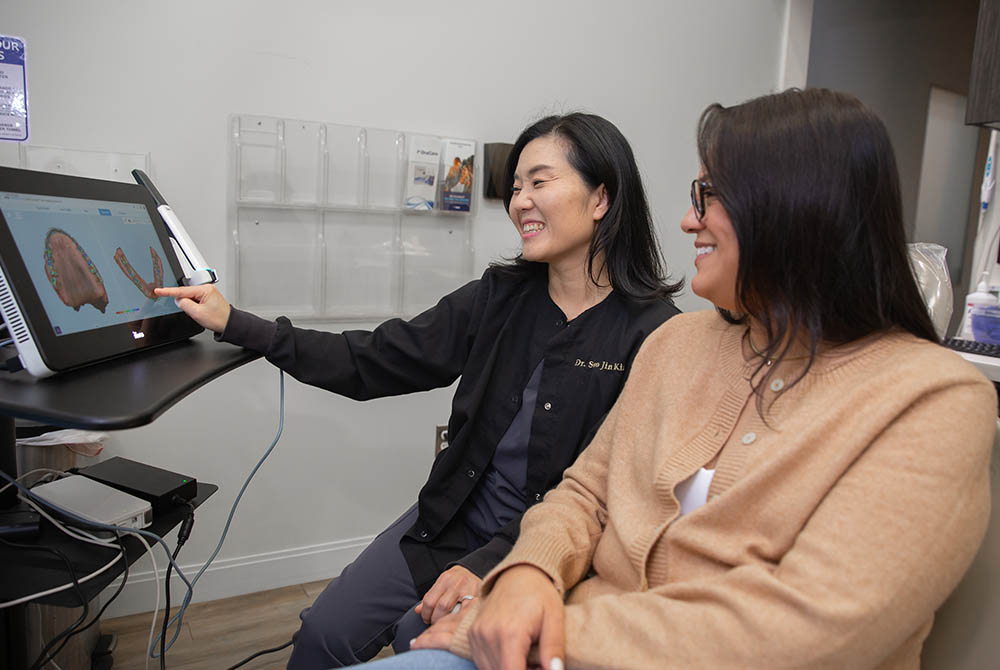
Who You'll See
-
Soo Jin Kim, DDS
Family and cosmetic dentist
Plans care for the whole mouth, looking past the one problem a patient comes in with.
- Dental degree
- DDS, New York University, Omicron Kappa Upsilon honor society
- Residency
- Icahn School of Medicine at Mount Sinai
-

Sung Min Lee, DDS
Periodontist
Places implants and does bone and gum grafting when a plan includes them.
- Board certified
- American Board of Periodontology, 2023
- Specialty training
- Periodontics residency, Columbia University
Patient reviews
-
“My consultation was like no other.”
– Colleen F
-
“Not only did they exemplify professionalism but were also extremely friendly and thorough during the entire process.”
– Stephen B
-
“The office is always clean, the staff is friendly, knowledgeable, helpful, and professional.”
– Massiel Melo S
-
“Dr. Kim is my whole family’s dentist!”
– Saeeda b
Dr. Kim on full-mouth reconstruction
Overview
When problems across many of your teeth affect your chewing, comfort, speech or appearance all at once, that is when we start thinking about a full mouth reconstruction. You might have teeth that grinding, acid or other habits have worn down, large fillings that are failing or decaying, or a bite that lost height (vertical dimension of occlusion) as your teeth wore down. Severe wear becomes more common with age: it is estimated to affect about 3% of adults at age 20 and 17% at age 70. People born with a condition that affects how their teeth form may also need extensive restoration. What we're working toward is a mouth that is healthy and works well as a whole, and how it looks usually improves with the same work.
We look at the whole picture before planning: your teeth, your gums, the bone that supports them, your bite and your jaw joints. Your finished restorations have to work with every one of them, which is why the examination is thorough. If wear is the main problem, we also work out what is causing it and manage that cause. A European consensus statement on severe tooth wear says managing it depends mainly on how severe the wear is, what effects it is having and what the patient wants. It recommends delaying restorative work for as long as possible and keeping that work conservative and minimally invasive once it is needed. From there, a model of your planned teeth, either shaped in wax (a diagnostic wax-up) or designed digitally, guides the rest of your treatment.
We work through the plan in stages, and orthodontic treatment may be one of them. Moving teeth can make room for replacement teeth or correct a deep bite, which can save tooth structure that restorations would otherwise remove.
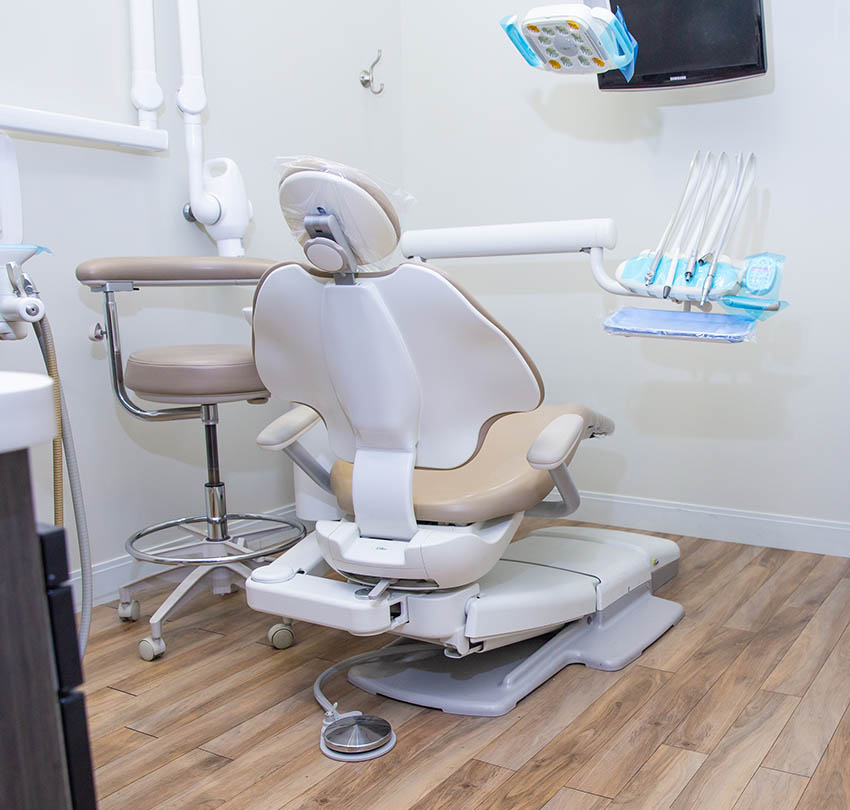
What to Expect During Treatment
- The first conversation is about what bothers you about your teeth, chewing or bite, and we also go through your dental and medical history and medications
- The examination covers your whole mouth, not only the problem that brought you in: teeth, gums, supporting bone, bite and jaw joints
- We take digital X-rays, photographs and a digital scan of your teeth and bite to record where you are starting
- If implant planning needs a 3D picture of your teeth and jawbone, we use our cone-beam CT scanner
- Your exam findings guide the plan. Missing teeth may need implants or bridges; a bite problem may need orthodontic treatment together with crowns or bonding. Preventive care and any cosmetic work are included in the same plan
- A diagnostic wax-up or digital design shows the planned shape and bite of the new teeth, and we walk you through the treatments, their order and the length of each stage
- We treat any decay, infection or gum disease first, which may include fillings, root canal treatment, removal of teeth that cannot be kept, and periodontal therapy
- If teeth need to move, orthodontic treatment with clear aligners or braces comes next
- Implant placement, bone grafting or other surgical steps in the plan are completed and allowed to heal
- Where the bite height is changing and jaw joint or muscle symptoms are present, a removable appliance may be worn first to test the new position
- We prepare the teeth and fit provisional restorations made from the approved design, and while you wear them we check and adjust the bite, appearance, comfort and speech
- The final crowns, onlays, bridges, veneers, implant restorations or dentures are placed, and your bite is checked and adjusted
- A night guard may be made to protect the restorations, and maintenance visits review the teeth, gums and restorations over time
Risks
When to avoid
- Tooth wear within the range expected for the person's age (physiological wear) that is not causing problems with chewing, comfort or appearance
Possible risks
- The risks of each treatment in the plan, such as tooth sensitivity after teeth are prepared and the surgical risks of extractions, implants and gum surgery
- Loss of tooth structure that cannot be restored when teeth are prepared for crowns or onlays
- Temporary jaw muscle or joint discomfort while adapting to a change in bite height
- Changes to speech while adjusting to new tooth length or position
- Chipping, fracture, wear or debonding (coming loose) of restorations, and the eventual need to repair or replace them
- More mechanical and technical complications of restorations (problems with the restorations themselves) in people who grind or clench their teeth
- Fracture, loosening or wear of provisional restorations during the interim stages
- Decay or gum inflammation where restorations meet the natural tooth, particularly when cleaning around them is difficult
- Dissatisfaction with the appearance or feel of the result
Who needs extra care
- Active gum disease, which is treated before the final (definitive) restorations are made; the restorative phase follows completion of active periodontal therapy, with ongoing gum maintenance (supportive periodontal care) afterward
- Temporomandibular disorder (jaw joint or jaw muscle) symptoms, where a change in bite height is generally trialed with a removable appliance first to control symptoms before any irreversible step
- Teeth grinding or clenching (bruxism), which is linked to more mechanical and technical complications of restorations, so materials and design account for heavy biting forces and a night guard may be made to protect the finished work
- Ongoing acid erosion or other active causes of tooth wear, which are identified and managed with preventive measures alongside any restoration
- A condition that rules out one of the treatments in the plan, such as incomplete jaw growth for dental implants, which leads to that treatment being postponed or replaced with another within the plan
When It's Recommended
- Teeth worn down across much of your mouth from grinding, clenching, acid (erosion) or other habits
- Several teeth that are cracked or broken
- A lot of big fillings or older dental work (restorations) failing or decaying all at once
- Several teeth missing in one jaw or both
- A bite that has lost height from wear, where that height needs restoring to make room for restorations
- Lost teeth and changes in how you chew caused by advanced gum disease (stage IV periodontitis), once treatment to bring the gum disease under control (active periodontal therapy) is finished
- Teeth that formed differently because of an inherited condition (such as amelogenesis imperfecta, dentinogenesis imperfecta or ectodermal dysplasia)
How It Works
We treat your teeth, gums, bite and jaw joints as parts of one system. Your examination shows us where the damage came from, whether gum disease, tooth loss, fractures, decay or wear, and your plan takes on each of those causes as we rebuild your teeth into a bite that stays stable and is comfortable for your jaw muscles and joints.
- We work out bite height as part of your plan. Worn teeth are often shorter than they were, so we may restore some of the height they lost, which can make room for the restorative material and improve how your front teeth look. A minimal increase is generally preferred. Your chewing system can adapt to moderate changes, and any symptoms early on are usually short lived.
- Before rebuilding anything, we bring disease under control. We treat decay and infection, remove teeth that can't be kept, and finish gum treatment (periodontal therapy) before the final restorations are made, so your new restorations sit on healthy teeth and gums.
- Which restoration we use depends on the tooth or gap it has to repair. For a tooth that is worn, broken or heavily filled, we rebuild it with a crown or an onlay. Where teeth are missing, bridges and implants replace them. When the pulp inside a tooth is infected or damaged, root canal treatment deals with it, and when a jaw has few or no teeth left, dentures or implant-supported dentures restore it.
- We make temporaries (provisional restorations) from the diagnostic wax-up, the model that shows the planned shape and bite of your new teeth, and you wear them in daily life so the new bite, tooth shape, lip support and speech can be tested. We can adjust them while you heal and while other stages are finished. When you and our team are both happy with them, they become the guide for your final restorations.
Recovery & Aftercare
- How you recover depends on which stage of your plan you're at. After teeth are prepared for crowns, you can generally get back to your normal activities the same day. Extractions, implant placement and gum surgery need days to heal, and implants take months to bond with the jawbone
- Some soreness in your gums and sensitivity in the prepared teeth are common for a few days after those appointments
- You wear your temporaries for weeks or months while the rest of the plan is completed, and we may ask you to avoid very hard or sticky foods while you have them
- Getting used to a new bite height and new tooth shapes can take a while. If your jaw muscles feel mildly tired or your speech changes, that is usually temporary
- Brush twice a day with fluoride toothpaste, clean between your teeth and around any implants every day, and keep your regular maintenance visits; together these help protect your restorations and the gums around them
- If grinding or clenching is a factor, wearing a night guard during sleep can help protect your finished restorations
- If a restoration chips, loosens or comes off, your bite feels uneven, or your gums stay swollen or bleed, let our office know
A patient on full-mouth care at ConfiDental